
- By Kartik .
- September 30, 2026
In the end, the choice usually comes down to how many items you track, the site conditions, and what you can spend. Barcode tracking works well when the volume is low and the budget is tight. Labels cost little, and almost any phone can read them. RFID works better when you have a lot of assets across several locations or when assets are high value. A reader can capture many tags quickly at once, and tags do not need a direct line of sight.
An individual team spent days counting assets last quarter. The spreadsheet still did not line up with what was on the shelves. In the UAE, heat and dust slow down checks, and multi-site work adds more friction. So choosing RFID or barcode for asset tracking is not just a “tech choice”. It is a day-to-day operations call.
In the end, the choice usually comes down to how many items you track, the site conditions, and what you can spend. Barcode tracking works well when the volume is low and the budget is tight. Labels cost little, and almost any phone can read them. RFID works better when you have a lot of assets across several locations or when assets are high value. A reader can capture many tags quickly at once, and tags do not need a direct line of sight.
For many UAE firms, a common move is to begin with barcodes. Then add RFID later on in the areas where labour savings are worth the added cost.
What is the difference between RFID and barcode tracking?
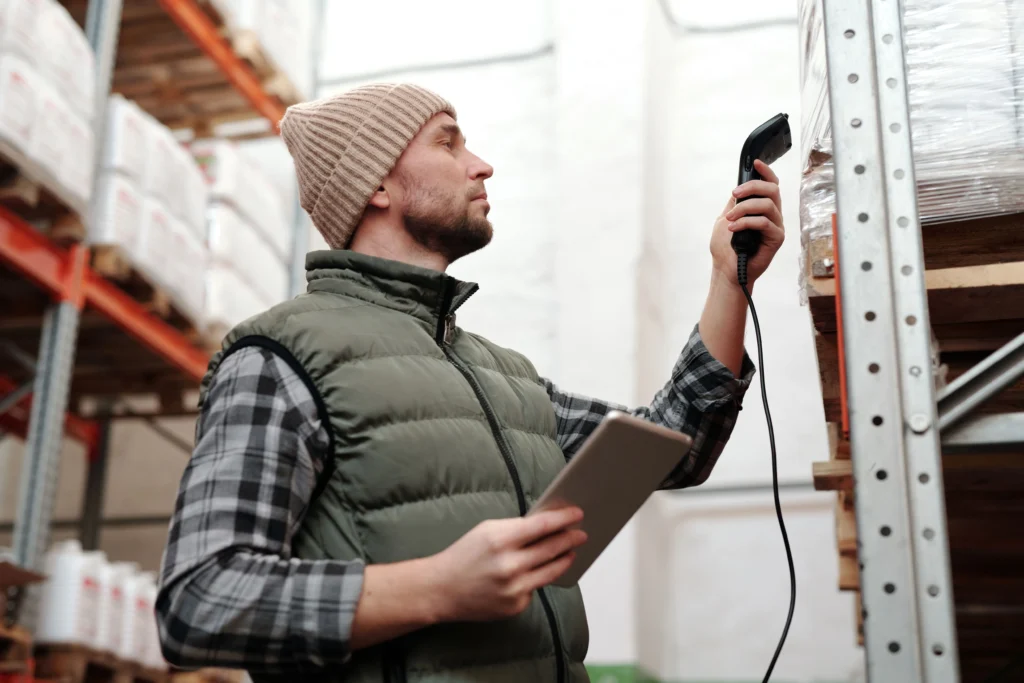
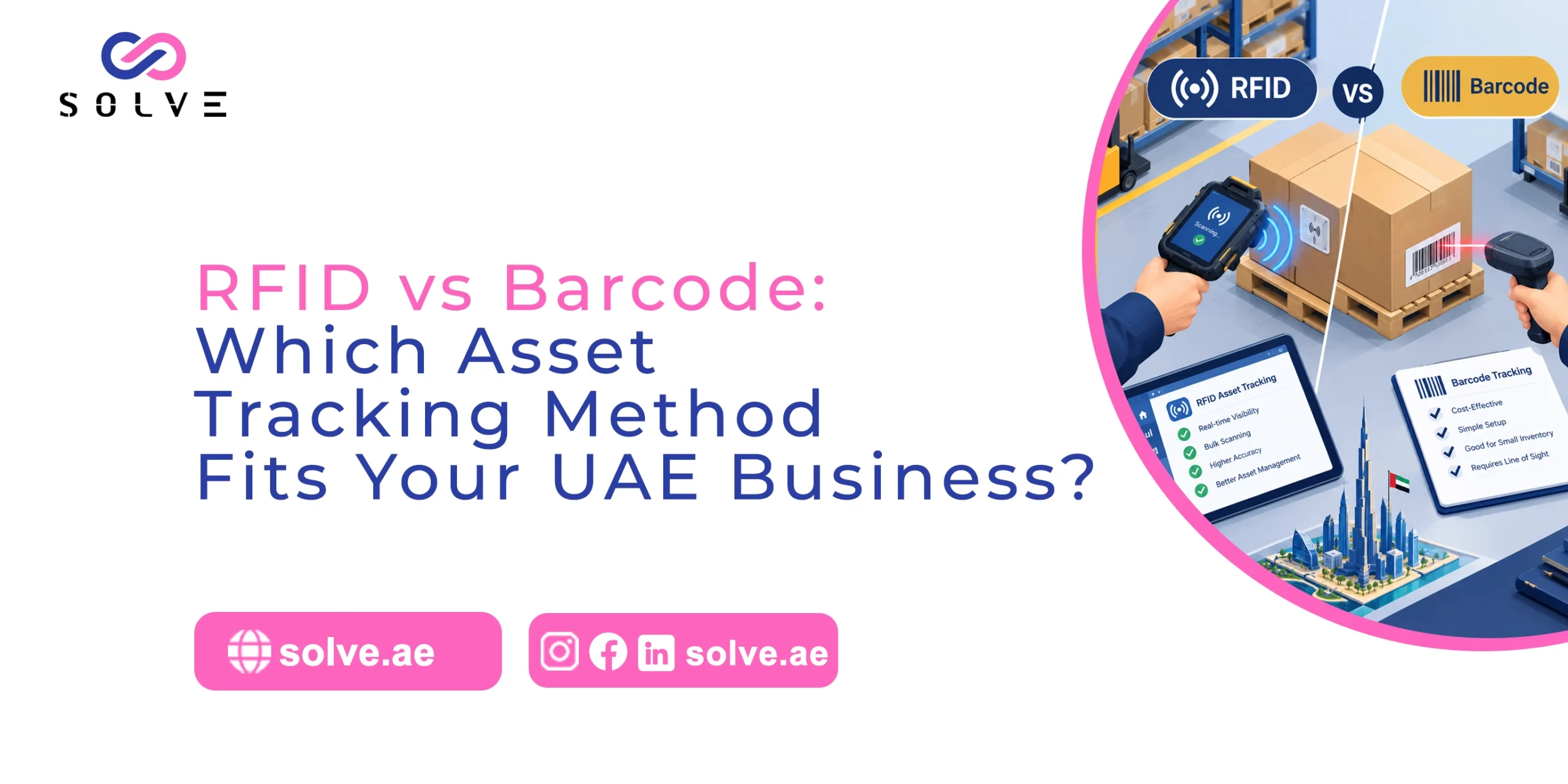
The main gap is how the reading happens. A barcode has to be scanned label by label. The scanner also needs a clear line of sight. RFID uses a reader that can pull many tag IDs in one pass, even if tags are inside packaging. With RFID, line of sight is not required.
How barcode tracking works
A printed label, either 1D or QR, is tied to an entry in your asset records. Staff scan the label using a phone or a dedicated scanner. That scan helps confirm which asset it is and where it is. It is easy to start and works almost everywhere. That is why many UAE offices, schools, and small warehouses still rely on it.
How RFID tracking works
A reader sends power to a tag and then reads its unique ID. Most passive UHF tags do not have a battery. Because of that, they are smaller, cost less, and last longer. They also support most asset tracking setups. Fixed readers can be placed at doors or at dock gates, where they can log movement on their own.
Why RFID or Barcodes for Asset Tracking Are a Big Deal in the UAE
The method you pick affects staff time, lost assets, and how often audits get delayed. That is why the choice matters for many UAE firms each month. RFID is no longer a small niche option. In 2024, 52.8 billion RAIN UHF tag chips were shipped worldwide, as reported by the RAIN Alliance. In the UAE, a local market study also points to growth of about 7.47% CAGR. It sits higher than the wider region, mainly because logistics and trade systems create clear reasons to track assets well.
In the UAE, these three issues usually steer the decision.
1) Heat and sunlight: Outdoor equipment is often hit by sun and hot weather. Printed labels can fade, and when labels are hard to read, audits slow down. RFID tags that are sealed and encased handle outdoor exposure better.
2) Metal and liquids: Racks made of steel, containers, and chilled goods can interfere with UHF signals. With RFID, this means on-site checks are needed. In some cases, you may also need tags made to work on metal.
3) Scale and spread across sites: Free zones, warehouses, and branches across different emirates can increase the work of manual scanning. More locations often means more effort just to keep counts correct.
Check out our latest blog post on The Future of Warehouse Automation: RFID with IoT and AI
RFID vs Barcode Asset Tracking: Cost and Delivery Time
RFID usually costs more upfront. Barcode systems often cost less upfront, but they can demand more labor as the number of assets rises. The numbers below are USD planning ranges from RedBeam’s cost breakdown. They have been converted to AED using the peg rate of about 3.67. Use these ranges for planning, not as fixed quotes.
| Item | Barcode | RFID |
| Tag or label | AED 0.07–0.18 | AED 0.18–3.70+ (passive) |
| Scanner or reader | Your smartphone, or ~AED 730–2,940 | AED 3,670–12,850 |
| Software | Per-user subscription | Per-user subscription plus middleware |
| Cycle-count labor | Baseline | Can be cut by 50–75% with bulk scanning |
Timeline: Barcode tracking can start the same day, since you tag assets and scan with phones. RFID is best rolled out in stages: a site survey, then one dock door or zone, then expansion. Peak Technologies warns that a provider willing to sell RFID without a site survey is a red flag. As a planning estimate (not a sourced figure), expect several weeks for a single-zone RFID pilot, depending on site complexity.
How to Pick an Asset Tracking Setup: 6 Steps
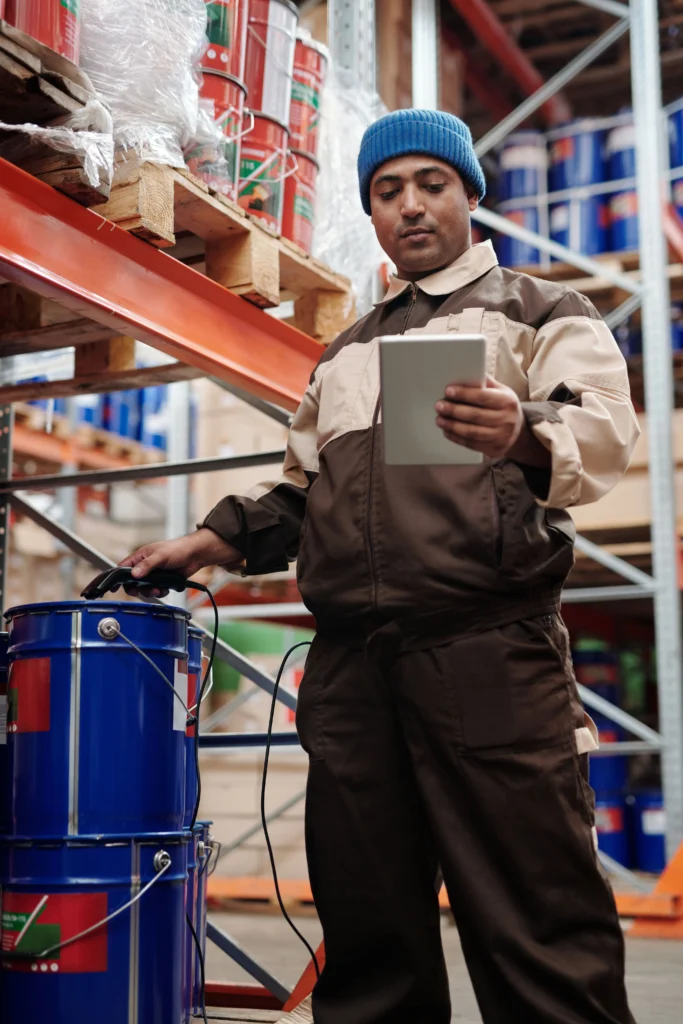
The best approach is the one that fits how many assets you have, where they live, and what your audits require. You can narrow it down in six steps.
1) List assets and sites: Write down your total asset count and how many locations you manage. If you have a few thousand items at one site, barcodes often work well. If you spread tens of thousands across multiple sites, RFID usually makes more sense.
2) Split by asset type: Group items by value and how often they move. Treat high-value or fast-moving assets in a different way than low-value items like spare furniture or basic tools.
3) Check the setting: Look at the surroundings before you pick tags. Note metal shelving, nearby liquids, outdoor exposure, and heat. These factors can affect how well RFID reads.
4) Review how long it takes now: Estimate the time for a full audit. If the current count uses days of staff work, figure out what you might save if you cut the time by about half, or even 50 to 75 percent.
5) Plan the rollout money in stages: Start with barcodes on mobile phones. Then add RFID only for the areas where time cost is highest.
6) Run a small pilot first: Test RFID in one door or one zone. Do it with your real workflow, not a demo. After that, expand to the next area.
Example: Warehouse Case in Brief
This is only a made-up example to show the logic. It is not a real outcome for a customer.
A distributor based in Dubai tracks around 15,000 assets. The items include tools, pallets, and racking gear across two warehouses. Each quarter, they run counts with barcode scanners. A team of six spends several days on it.
Outdoor yard equipment has labels that fade. About one-tenth of those items get skipped, or the team makes a best guess for them.
They keep barcode labels for small office and IT gear. Then they try RFID at one dock door and in the yard. If bulk reads cut the count time by even the lower half, the team saves full days each quarter. After that, yard tags stop failing as often.
So the takeaway is a mixed setup. Use each method where it helps most and where it is worth the cost.
Frequently Asked Questions
Q1. Is RFID better than barcode for asset tracking?
Not in every case. RFID can be quicker when you track huge batches. Barcodes cost less and are simpler. The best choice depends on your asset count and your surroundings.
Q2. How much does RFID cost versus barcode in the UAE?
Passive RFID tags often fall between AED 0.18 to 3.70+ each. Readers can be around AED 3,670 to 12,850. Barcode labels often run from AED 0.07 to 0.18 per label. Local quotes matter because numbers can change.
Q3. Does RFID work on metal and liquids?
Sometimes, but not the same way. Metal and liquids can weaken UHF signals. You may need on-metal tags and a site test.
Q4. Can I run RFID and barcode at the same time?
Yes. Many teams do. RFID can cover bulk receiving. Barcodes can then confirm each item at checkout.
Q5. How long do RFID tags last?
Passive tags can last 10 years or longer because they don’t use a battery. Real-life use can cut the lifespan if tags get cracked or worn.
Q6. Can a smartphone scan RFID tags?
Only certain types. Phones can read short-range HF and NFC tags. UHF asset tracking usually needs a dedicated reader. Barcodes can be scanned with a normal phone camera.