- By Vanshika Choudhary
- July 13, 2026
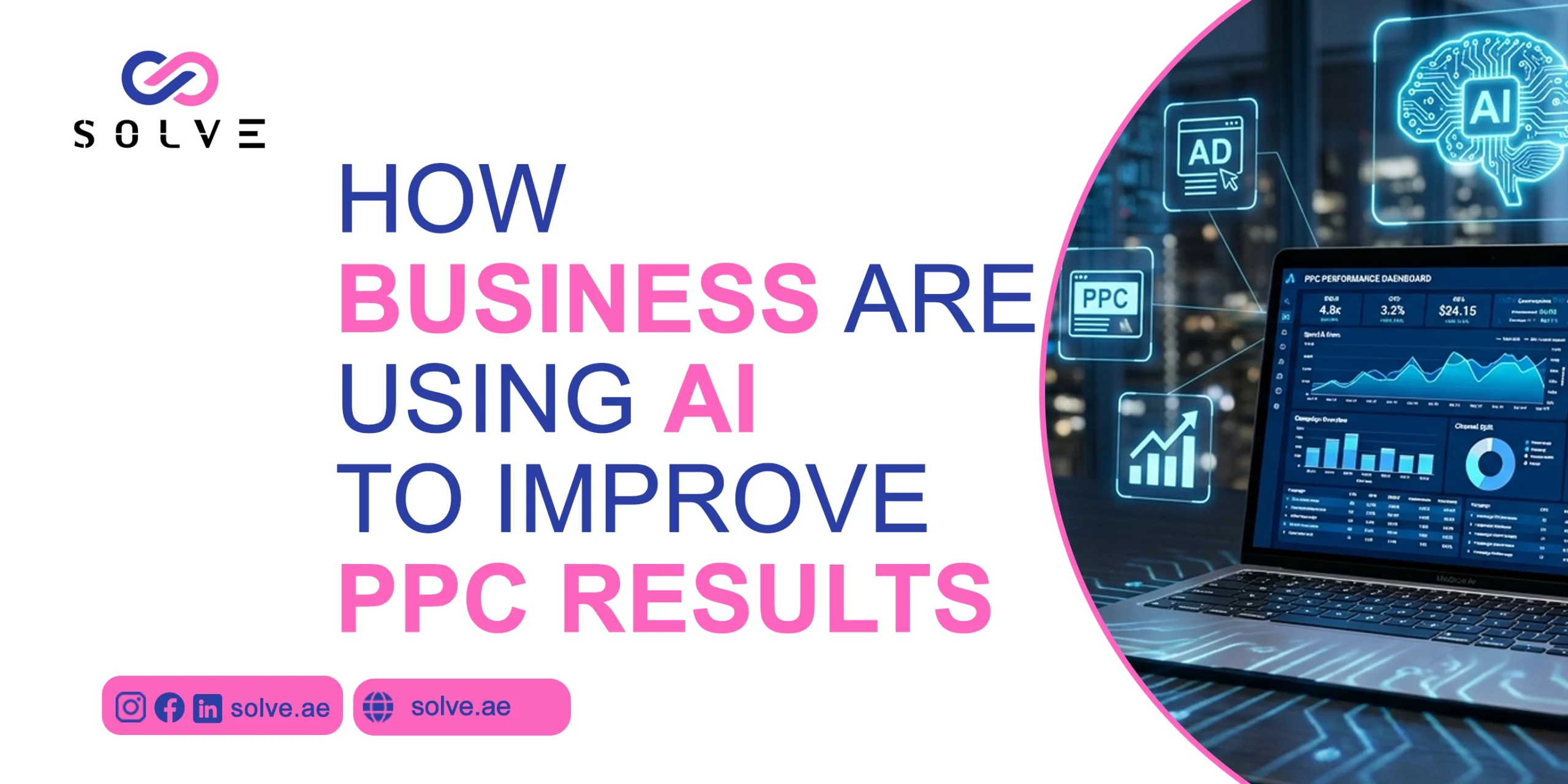
Businesses are using AI in PPC mostly for four kinds of practical things: automated bidding and budget allocation, AI-generated ad text and creative, predictive audience figuring (targeting), and real-time performance review that spots waste pretty quickly before it eats through the budget. Companies that roll these tools in usually end up with lower cost-per-acquisition and better conversion numbers than folks who still bid by hand, but the win rate really depends on how good the inputs are—like product feeds, solid conversion tracking, and the creative materials themselves that get pushed into the machine.
Why This Matters Right Now
Paid search has been shifting a lot in the last 2 years, more than it did in the previous decade. Global PPC spending is headed toward passing $300 billion in 2026, and a bigger chunk of each dollar is now controlled by machine-learning systems rather than someone sitting there with a bid slider all day. Also, newer industry polls with PPC folks show that most are using large language models for ad copy, and automated bidding has basically become the normal setting rather than some rare experiment across Google, Microsoft, and Meta.
So yeah, that creates a real question for any business running paid campaigns: what is AI actually doing differently, and should you reorganise your PPC workflow around it? Here’s a clean-ish breakdown of where AI is delivering true traction, where human checks are still needed, and how to judge if it’s truly helping your account.
-
Automated (Smart) Bidding
This is probably the most mature and most commonly adopted way AI shows up in PPC. Instead of a person manually nudging bids up or down based on gut feeling, machine-learning models tweak bids in real time using signals like device, location, time of day, and user intent, mixed together in ways humans don’t really replicate.
What businesses are seeing:
Advertisers who make the switch to smart bidding often report not just slightly, but meaningfully higher conversion rates at the same budget than they get with manual bidding. Google’s own research on automated bidding systems has also indicated lower cost-per-acquisition for advertisers who adopt enhanced automation features, which is pretty hard to ignore.
Performance Max, Google’s fully automated campaign type that covers Search, Display, YouTube, and Shopping, has basically become the dominant setup for e-commerce shopping campaigns. The catch, though, is kinda simple and annoying. Automated bidding is only as strong as what it’s actually optimising toward. If your conversion tracking is off, or if your conversion definitions are vague (like treating a newsletter signup the same as a purchase), then the algorithm will just chase the wrong signal.
Businesses that land the best results treat “inputs” as the real lever—clean tracking, accurate conversion values, and dependable product feeds—not the bidding strategy itself, no matter how advanced it sounds.
-
AI-Generated Ad Copy and Creative
Writing dozens of headlines and description variations for responsive search ads used to be manual, slow, and kind of tedious. Now, a large majority of PPC professionals use AI tools to draft, test, and then refine ad copy with less friction.
How businesses are using it:
They generate multiple headline-and-description combinations quickly, then let the platform’s algorithm figure out which option performs best with real audiences and not just guesses.
It also produce localised or audience-specific variants of the same ad without doing the whole “duplicate everything by hand” routine.
They draft early versions of copy that a human marketer reviews afterwards and edits for brand voice and compliance. In other words, AI handles the bulk; people handle the judgement.
Why it matters for visibility: Ad formats with richer creative—like product images, location extensions, and video—are consistently beating plain text ads on click-through rate. And as search results get more visual, and as AI-driven placement gets more involved, the gap only tends to widen.
-
Predictive Audience Targeting
AI models can now spot high-intent groups by reading patterns across first-party data… like website actions, CRM history, past buys—stuff that a person would take way longer to sort out.
What this tends to look like in the real world:
– Feeding first-party customer data into Google’s or Meta’s targeting engines to form “optimised” or lookalike audiences that mirror a business’s best customers.
– Predictive models also highlight which segments are likely to convert before budgets are locked in, not after the campaign is already kind of finished and gone.
– Some businesses pair AI overviews and audience signals to catch high-intent traffic even while certain searches are drifting away from plain organic clicks.
– And when companies use optimised targeting alongside strong first-party audience data, they’ve reported meaningful performance jumps versus standard targeting, which is one reason the first-party data strategy has become such a priority as third-party cookie shutdowns and privacy rules keep reshaping measurement.
-
Real-Time Performance Monitoring and Anomaly Detection
Instead of waiting on a weekly recap, AI dashboards are now able to flag anomalies while they’re happening—like a sudden CTR dip, a cost-per-click spike, or a weird fraud pattern.
Where this shows up as value:
– Fraud detection: In areas with higher CPCs, say legal services or home services, click-fraud rates can rise a lot. AI fraud detection tools are increasingly treated like core infrastructure rather than an optional extra in those verticals.
– Budget pacing: Automated systems can shift budgets across campaigns or platforms mid-month, not just after the damage, so wasted spend on weak placements gets reduced.
– Faster testing cycles: AI tools can shrink the feedback loop for creative and audience testing, so businesses can iterate weekly instead of waiting out the month, like in the past.
Check out our latest blog post on The Secret to Lowering CPC While Increasing Conversions
What Businesses Are Getting Wrong
AI adoption in PPC is not automatically a guaranteed win. A noticeable portion of PPC professionals say campaign management feels harder than it did two years ago, not easier—mainly because automation has reduced the visibility into why a campaign is behaving a certain way. Common missteps include:
- Feeding automated systems bad data. Automation tends to amplify whatever it gets. If conversion tracking is inaccurate or product feeds are messy, the system may “learn” with confident wrongness and then optimise towards that.
- Letting automation run the show, completely. The businesses getting stronger outcomes treat AI more like a co-pilot for execution, while strategy, brand judgement, and testing assumptions stay in human control, not wiped out.
- Ignoring the measurement setup. With third-party cookie deprecation and tighter privacy rules, server-side tracking plus CRM integration are starting to feel not optional but necessary, just to provide AI systems with the right signals to absorb.
- Chasing every new AI feature. Not every shiny automated capability fits every account. Testing any change on a small, controlled slice of spend before it rolls across the whole account helps limit downside risk.
Frequently Asked Questions
Does AI replace the need for a PPC strategist?
No. AI handles execution—bid adjustments, copy variations, real-time signal processing—at a speed and scale humans simply can’t match. Still, strategy, budget decisions, brand judgement, and figuring out why a campaign works (or doesn’t) need human skill. A lot of agencies are shifting from hands-on, keyboard-heavy roles to more advisory work for exactly this reason.
Is AI-driven PPC only useful for large businesses with big budgets?
Small- to mid-sized companies often get a lot from automated bidding and AI-assisted ad text, basically because they don’t have the time or manpower to manually try dozens of ad versions or watch bid levels every hour. The real thing to check isn’t “how much money you have” — it’s whether your conversion signals are clean enough for the AI to learn from.
If a business hasn’t started using AI in PPC yet, what’s a sensible way to begin?
Go back to basics first: make sure conversion tracking is solid, clean up product feed data, and run an automated bidding pilot on one campaign only before you roll it out wider. After that, add AI-generated ad copy testing because it’s usually a lower-risk step and you can generate a bigger creative batch right away.
Conclusion
AI hasn’t “replaced” PPC strategy; it’s just changed what “doing PPC well” means. A lot of the grunt work—tweaking bids, shipping endless ad variations—is increasingly automated. What makes the difference for top performers now is the quality of the inputs they provide to these systems: clear tracking, dependable first-party data, and strong creative assets. Contact us as Companies that treat AI like an amplifier for solid fundamentals are seeing real efficiency gains. Those who try to use AI as a replacement for strategy are often the ones saying PPC feels harder than it used to, even with automation running.