- By Vanshika Choudhary
- June 16, 2026
Decentralized Finance (DeFi) basically changed the finance industry a lot, because it lets people use services like lending, borrowing, trading, and staking without needing the usual banks. In a way, it creates a more open financial system where users have a bigger grip on their assets and what happens to their transactions. And since DeFi keeps getting more popular, more investors and even organizations are looking into blockchain-based finance solutions. Still, the fast growth also kind of showed the limits of the blockchain networks we already had, especially scalability and those annoying transaction costs.
Networks like Ethereum have sometimes had trouble keeping up with the rising count of DeFi transactions. When lots of users are active, people can run into slow transaction processing, or worse, very high gas fees. Honestly, this makes DeFi less practical for smaller investors, who may not be able to pay these costs. So to deal with these problems, Layer 2 scaling solutions showed up as an important method for improving performance and enabling broader adoption.
What Are Layer 2 Scaling Solutions?
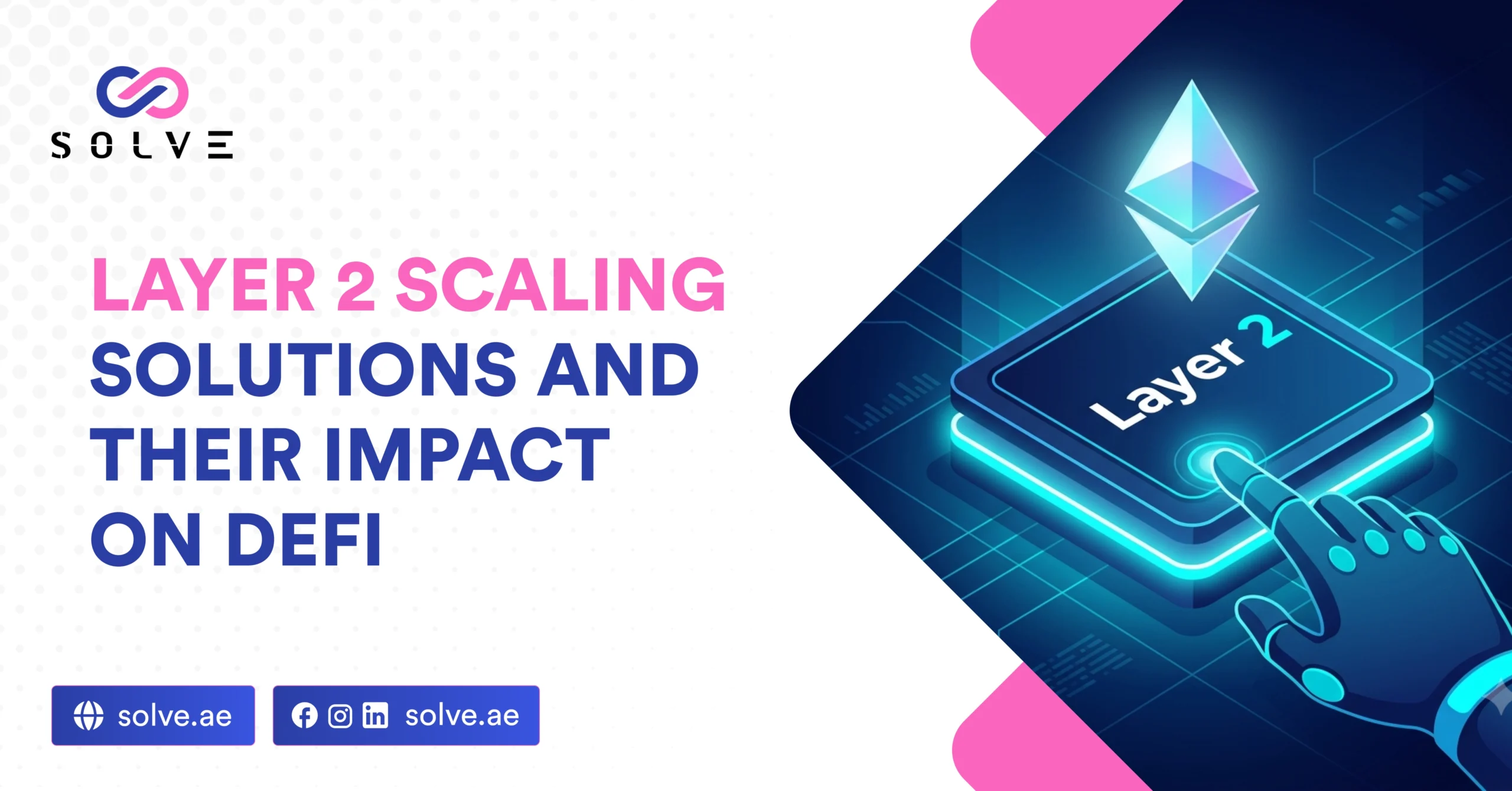
Layer 2 scaling solutions are tools built on top of a blockchain’s main network, which is also called Layer 1. The main idea is to boost transaction speed and lower fees without giving up the security that the base chain provides. Rather than forcing every single transaction to run directly on the main chain, Layer 2 handles the transactions somewhere else first, then sends the outcome back to the primary network. That alone cuts down the stress on the main blockchain, pretty noticeably.
When you shift a big chunk of activity away from Layer 1, Layer 2 solutions help the whole network run better. They let the system handle far more transfers and operations while maintaining the same core security assumptions, and this is why they matter when adoption keeps accelerating.
Why Does DeFi Need Layer 2 Solutions?
High Transaction Fees
Honestly, one of the main roadblocks to DeFi adoption is just the high transaction fees on the big blockchain networks. During congestion periods, people can end up paying a lot, not even for anything fancy, just to run basic things like token swaps or staking actions. So if the network is busy, the fee can feel like it eats the whole plan. This discourages regular users from joining in; efficiency and decentralized finance are way less friendly for average investors. It’s especially rough when someone is doing small-value transactions, because then the fee is a much bigger share of the amount.
Layer 2 solutions help fix this by handling transactions with more efficiency and also by reducing how much the main blockchain has to do. In simple terms, they bundle many transactions into groups and then settle them in a collective way. That approach tends to cut transaction costs quite a bit. As a result, users can interact with DeFi apps while not constantly calculating whether the fee will be too high. When costs drop, participation rises, and the whole ecosystem tends to grow faster.
Network Congestion
When more people jump into DeFi platforms, the networks often get crowded, because there’s only so much processing capacity available. Once the volume of transactions passes what the network can comfortably handle, users start seeing delays, plus longer confirmation times. And that matters a lot for trading, lending, and other financial actions that basically need quick execution. In the end, congestion lowers the overall efficiency of decentralized finance platforms, kind of like making everything run through a bottleneck.
Layer 2 technologies help, sort of, alleviate congestion by moving transaction processing away from the main blockchain. In practice, this reduces the pressure on Layer 1 networks so they can run a bit more smoothly and with less stress overall. Users typically see faster transaction confirmations, plus a noticeable improvement in day-to-day platform performance. Since DeFi adoption keeps climbing, congestion management is getting more and more important if the user experience is going to stay positive.
Limited Scalability
A lot of older blockchain networks weren’t built at the beginning to handle, literally, millions of transactions each day. Their limited transaction throughput becomes a bottleneck, and these bottlenecks slow everything down, which in turn restricts growth and future innovation. And as more DeFi applications keep showing up, scalable infrastructure becomes kind of non-optional. Without real scalability improvements, blockchain adoption might hit serious limits.
Layer 2 solutions increase the number of transactions that can be processed during a given period, so scaling becomes less painful. With this boost in throughput, DeFi platforms can support bigger user bases and also handle more intricate financial products. Developers can build novel applications without constantly thinking about network constraints. So, Layer 2 technologies are helping lay down a stronger foundation for decentralized finance in the long run.
Types of Layer 2 Scaling Solutions
Optimistic Rollups
Optimistic Rollups process transactions off the main blockchain and then submit transaction data back to Layer 1. They treat transactions as valid by default, and verification only happens if a dispute comes up. This design lowers computational requirements and, in many cases, improves overall efficiency. Because of that, it’s become one of the more widely adopted Layer 2 scaling approaches.
The popularity of optimistic rollups comes from how they can cut costs pretty a lot while still staying compatible with the DeFi apps people already use. Devs can move their stuff over with just small modifications, so adoption feels easier and less scary. Meanwhile, users often see lower fees, plus transaction confirmations that feel quicker than on the main chain. So, this blend of comfort and efficiency basically helped them spread so widely.
Zero-Knowledge (ZK) Rollups
ZK Rollups rely on advanced cryptographic proofs, to check and validate transactions before those batches get pushed to the main blockchain. Those proofs make sure each transaction is valid, but they do it without leaking extra details that nobody needs. Because of that, the network can crank through huge volumes of transactions in a smooth way and still process all the transactions. Many people see this approach as one of the more promising scalability paths in blockchain.
One big upside with ZK Rollups is that they can deliver almost instant transaction finality. So users get quick confirmations and usually pay less, and yet they don’t have to trade away safety. That’s why these rollups are often favored by DeFi teams that need a lot of transactions flowing through all the time. And as the tech keeps getting more mature, it’s expected to become even more central in the broader blockchain world.
State Channels
State channels let participants carry out many transactions off-chain, then only commit the final result on-chain. This cuts down on the number of transactions that actually hit the blockchain, which in turn improves efficiency by a noticeable amount. They’re especially helpful when two parties, or more than two, interact often. In practice, they lower transaction costs and also reduce pressure on the network itself.
Since most activity happens off-chain, state channels feel extremely fast. Users can run numerous rounds of interaction without ending up with frequent on-chain writes, and that kind of responsiveness is what makes them attractive for certain use cases.
Sidechains
Sidechains are basically independent blockchains that sit beside a primary blockchain, connected using special bridges or linkages. They run on their own, not really tied to the main network timing, and each sidechain usually uses its own consensus method. That separation lets sidechains, in a sort of practical way, handle transfers and transactions more quickly and often with cheaper usage. Then, when you need it, users can move assets back and forth between the main chain and the side chain, kind of like pulling items through a side lane instead of the main highway.
A lot of DeFi participants like sidechains because they can deliver quicker confirmations and smaller fees. For developers, this is also useful, since they can test new functions, novel smart contracts, or different apps without touching the core blockchain. This flexibility tends to push experimentation and, um, broader ecosystem growth. So yeah, sidechains keep showing up as a key component in improving blockchain scalability over time.
How Layer 2 Solutions Are Transforming DeFi
Lower Costs for Users
One of the most noticeable benefits of Layer 2 technology is the drop in transaction costs. Lower fees make DeFi platforms feel more friendly to more people, including those who start with smaller investment amounts. When transfers are not that expensive, users tend to join in more often with decentralized finance activities, kind of like it becomes less of a chore. And then, this broader accessibility helps adoption grow across different regions and demographics, not just the early crowd.
Also, reduced costs let users stretch their profits in DeFi strategies such as yield farming and staking. Instead of handing over a big part of the gains to transaction fees, they keep more of what they earn. That noticeably strengthens the overall value proposition of these platforms. So yeah, lower fees do not just help individuals; they also nudge the whole ecosystem toward growth.
Faster Transactions
Speed is key for decentralized finance, especially for trading and arbitrage. If confirmations drag, people can end up missing chances and even lose money. Traditional blockchain networks may be a bit slow when demand spikes, because they can’t always handle the pressure. Layer 2 solutions try to fix this by pushing transaction processing to be more efficient and smoother.
Quicker transaction times also make the user experience better, which helps DeFi feel more competitive compared to traditional finance. People can place trades, move assets, and interact with applications sooner. That kind of responsiveness builds trust in decentralized technologies. In general, as speed improves, DeFi becomes more usable for day-to-day financial actions, not only for advanced users.
Improved Liquidity
Liquidity is really important for keeping financial markets working in a clean way and for making trading feel healthy. Layer 2 networks pull in more users, too, because they usually come with lower fees and faster or better performance. Then, more people participate, so liquidity pools grow larger, and market depth looks better. And that overall helps build a steadier and more efficient environment for everyone involved, not just a few.
When liquidity goes up, price slippage also tends to go down, and users can actually execute trades more effectively. It also makes decentralized exchanges and lending platforms work in a more solid way. As additional capital flows into Layer 2 ecosystems, DeFi protocols can become stronger and more resistant to shocks. This kind of loop keeps feeding itself, and it supports long-term ecosystem development, bit by bit. Check out our latest blog post on Biggest DeFi Hacks in History and What We Learned.
Enhanced User Experience
Complicated transactions, plus costly fees, have often discouraged some people from using DeFi platforms in the past. Layer 2 tech helps lower these barriers by making transactions more straightforward, quicker, and generally more affordable. Good usability matters a lot if you want mainstream users, especially those who are new and unsure about blockchain basics. When the experience feels smoother, people tend to stay engaged longer, and retention improves.
Also, as user interfaces get better at the same time as Layer 2 infrastructure, onboarding gets simpler for new participants. Users can reach decentralized financial services without having to wrestle with too much complexity. In a way, this bridges the gap between traditional finance and blockchain-based solutions. Better user experiences are kind of a must if you want mass adoption at scale.
Increased Innovation
Scalability improvements give developers more room to build and experiment with more advanced DeFi applications. When they don’t have to worry about network congestion and the usual high-fee headaches, innovation can speed up across the whole ecosystem. New financial products and services can then be created to match the market’s changing needs and expectations
Layer 2 solutions kind of give the infrastructure you need for newer, slightly wilder trends like decentralized derivatives, tokenized assets, and those advanced trading platforms. It lets developers tinker with new ideas while still keeping strong performance, not just “it works on my machine” stuff. And yeah, this added push for novelty helps the whole blockchain industry, overall. So in practice, Layer 2 techs are steering the next wave of DeFi development, whether people notice it or not.
Conclusion
Layer 2 scaling solutions have basically turned into one of the more important breakthroughs in the blockchain space. They reduce transaction costs, boost speed, and make scalability way less of a headache. Contact us as because of that; they tackle several of the issues that used to slow DeFi adoption down. Optimistic Rollups, ZK Rollups, State Channels, and Sidechains are the kinds of technologies helping build a decentralized finance ecosystem that feels more reachable and more efficient, too.
Also, as Layer 2 adoption keeps climbing, DeFi platforms should get quicker, cheaper, and better at serving a global audience. For investors, developers, and everyday users, Layer 2 solutions are a key milestone toward the future of decentralized finance.