- By Vanshika Choudhary
- March 26, 2026
When you create your first event registration page, it becomes a challenging process because you want your event to look professional while all components function correctly. The page serves as more than a form because it establishes the initial contact point between your event and potential visitors who will determine their attendance based on this interaction.
Users trust registration pages that meet their needs while providing valuable content through simple operational methods. The process enables organizations to achieve better results through enhanced conversion rates and improved attendee satisfaction. The development process requires your team to use a predefined checklist because it aids their work.
-
Define Your Event Goals and Audience
You need to clarify your event objectives before you start developing your registration page design work. Your goal could be generating leads, selling tickets, building brand awareness, or creating networking opportunities. The design process becomes easier when your objective is defined because it allows you to create a page that guides visitors toward your desired outcome.
Your organization needs to assess its target audience because it will determine all aspects related to the webpage, including its tone, content, and structure. A corporate audience requires professional content with extensive details, while a younger audience prefers simple content that features visual elements. You need to understand your audience’s requirements because they will determine which details to gather from participants and how you will showcase your event.
-
Choose the Right Registration Platform
Your registration process efficiency depends on your choice of platform because it functions as the fundamental element determining your operational performance. Your organization needs a platform that provides user-friendly operation while enabling customization and sustaining system performance during peak attendance times. The system needs to support efficient data management while delivering complete operational functionality to users.
The implementation of automated emails, together with analytics and marketing tool integration, will simplify your work process. The platform needs to provide users with trustworthy payment methods, which will help them establish confidence in their system security when handling payments. Your platform selection process requires careful consideration because an unsuitable choice will result in user drop-offs and customer dissatisfaction.
-
Create a Clear and Compelling Event Title
Your event title functions as a vital component because it attracts people to your event while establishing their initial perception of it. The event needs to be represented through simple and direct language, which enables users to identify its objectives. Your audience will experience confusion when you use complicated terms and ambiguous statements.
An effective title serves dual purposes by attracting suitable visitors to your content and enhancing its search engine discoverability. Event organizers should include relevant keywords in their event descriptions to increase online discoverability. When your title is both captivating and educational, it drives users to learn more about your content, which leads to higher registration rates.
-
Write an Engaging Event Description
The event description functions as the main tool that shows attendees why they should go to your event. The event description needs to provide a complete event overview, which includes its benefits and what attendees will experience. A well-written description builds interest and helps users connect with your event.
You should develop your description using clear writing methods instead of using long, boring paragraphs. The key benefits of the program should be presented through three main points, which include learning opportunities, networking, and exclusive insights. When users understand the registration advantages, they will complete their registration process.
-
Create a Clear and Compelling Event Title
Your event title functions as a vital component because it attracts people to your event while establishing their initial perception of it. The event needs to be represented through simple and direct language, which enables users to identify its objectives. Your audience will experience confusion when you use complicated terms and ambiguous statements.
An effective title serves dual purposes by attracting suitable visitors to your content and enhancing its search engine discoverability. Event organizers should include relevant keywords in their event descriptions to increase online discoverability. When your title is both captivating and educational, it drives users to learn more about your content, which leads to higher registration rates.
-
Write an Engaging Event Description
The event description functions as the main tool that shows attendees why they should go to your event. The event description needs to provide a complete event overview, which includes its benefits and what attendees will experience. A well-written description builds interest and helps users connect with your event.
Your description should use straightforward writing techniques that make it easy for people to understand. The key benefits of the program should be presented through three main points, which include learning opportunities, networking, and exclusive insights. When users understand the registration advantages, they will complete their registration process.
-
Add Date, Time, and Location Details
Clear and accurate event information helps to prevent confusion while enabling attendees to experience the event without difficulties. The complete date and time, together with the time zone, must be stated so that participants can make their arrangements. The presence of ambiguous information together with missing information creates uncertainty, which makes people less trustworthy.
The complete venue address, together with directional instructions, should be provided to assist attendees in finding the location of offline events. For online events, the platform must be specified together with the method that users will receive access links. When organizations present their complete information, it enhances their trustworthiness while attracting more visitors.
-
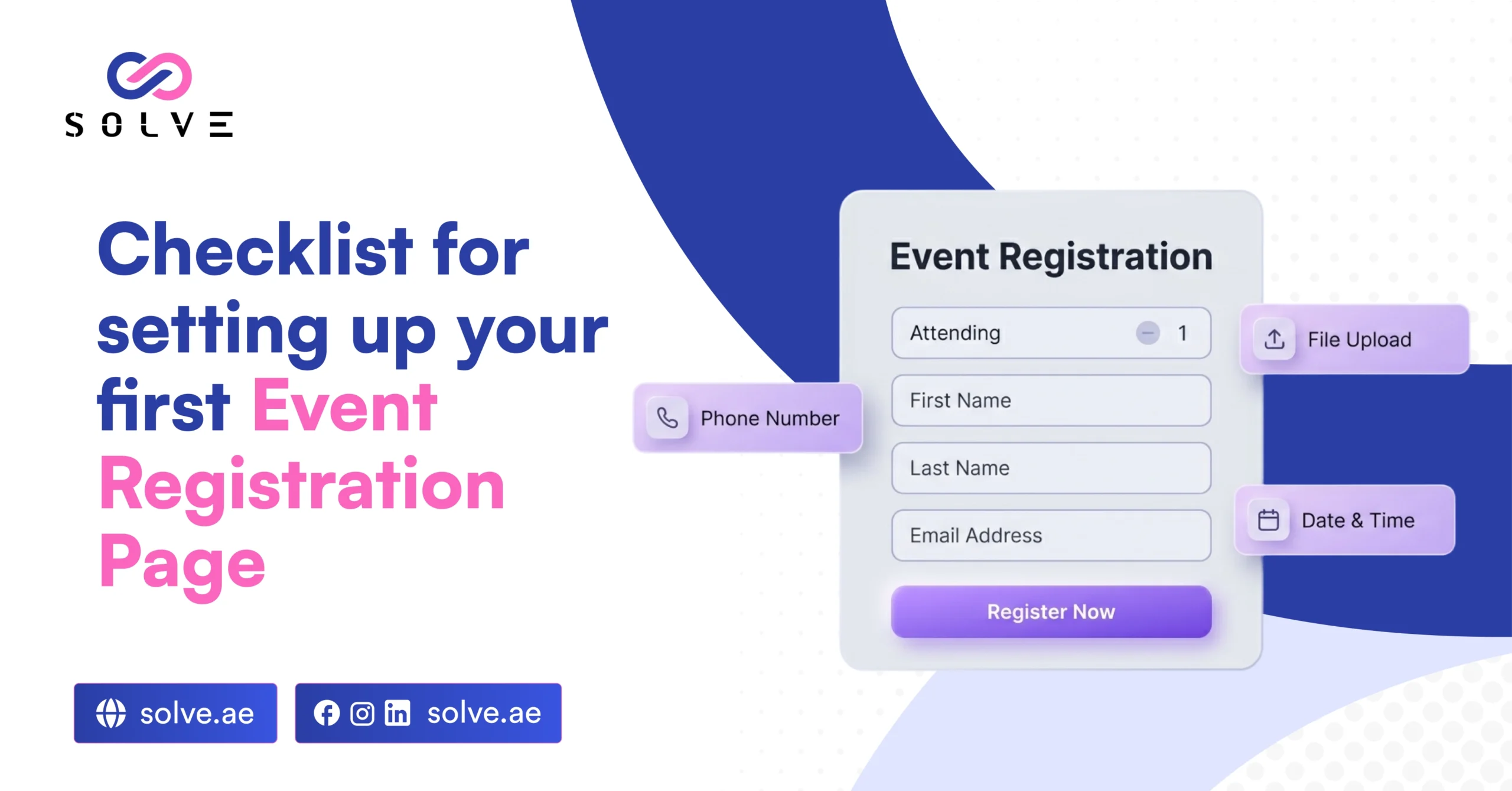
Design a Simple and User-Friendly Registration Form
You should create your registration form to achieve both straightforwardness and user-friendly functionality. Users become overwhelmed when asked to provide excessive information, which leads them to abandon their registration process. The form should remain brief because it needs only to collect necessary information.
The form needs to provide users with a direct way to finish their work without facing any obstacles. Your user-friendly form design improves user interaction while it boosts your conversion rates. Check out our latest blog post on 6 Proven Strategies to Boost Event Attendance in 2026.
-
Include Ticketing and Pricing Options (If Applicable)
Your event needs a pricing system that requires payment in the right way. Explain your pricing system. Users should easily understand what each ticket includes and why it is worth the price.
The description of your payment method needs to explain your entire pricing system because customers will not understand your pricing until they see it in full detail. The ticketing system requires customers to know which benefits they receive through their purchased tickets and which advantages make each ticket price legitimate. Trust between people develops through the practice of being transparent about essential matters.
The combination of multiple pricing choices, which include early bird discounts and premium packages, will enable your event to draw various attendee groups. The options create a sense of urgency, which motivates people to make decisions without delay. Users will complete their registration process because they find the payment system both simple and secure.
-
Add Visual Elements and Branding
The registration page design relies on visual elements to create an appealing and interactive experience. High-quality images, banners, or videos can instantly capture attention and make your event look more professional. The visually attractive page design maintains user attention.
Consistent branding, which uses specific colors, fonts, and logos, establishes credibility while helping people recognize your brand. Users tend to trust your event when your page appears professional and well-organized.
-
Enable Confirmation and Reminder Emails
A successful event needs an effective registration system, which depends on good communication between involved parties. The registration process requires users to receive confirmation emails, which contain critical registration information. The confirmation assures them that they successfully registered for the event.
Reminder emails help reduce no-shows by keeping the event fresh in attendees’ minds. The process of sending updates and reminders at appropriate times results in increased event attendance. The emails serve as a platform to present new content while keeping your audience engaged in the communication.
Conclusion
The process of establishing your initial event registration page becomes simplified when you use a checklist, which helps you track all specific requirements. The complete procedure has essential components that work together to produce a flawless experience for your audience. Contact us as the failure to acknowledge minor details will result in more significant problems that emerge at a later time.
A registration page functions as an information collection tool that establishes trust with users while encouraging them to take action. The combination of clear design elements and easy navigation, together with positive user experience, will lead to better performance results. Your registration page transforms into an effective event success instrument when you apply the correct methods.